EXPOSED: The Hidden Tool That’s Making Hardware Giants Panic (And Why They’ll Do Anything to Keep It From You)

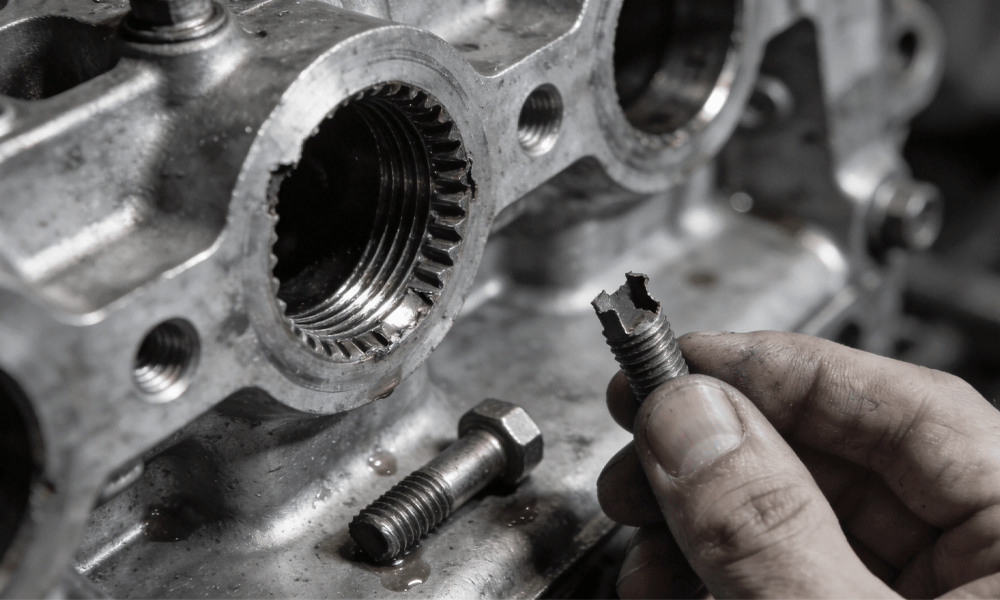
I held the snapped bolt in my greasy palm, staring at the jagged metal edge.
My stomach dropped.
This wasn’t just any bolt. This was the original factory-spec fastener from my late father’s 1967 Mustang—the car he’d promised to restore with me before cancer took him too soon.
And I’d just cross-threaded it into oblivion.
The engine block—an irreplaceable numbers-matching original—now had a permanently stripped hole where that bolt belonged. Repair? Maybe $1,200 if I could find a machinist willing to re-tap vintage cast iron without cracking it.
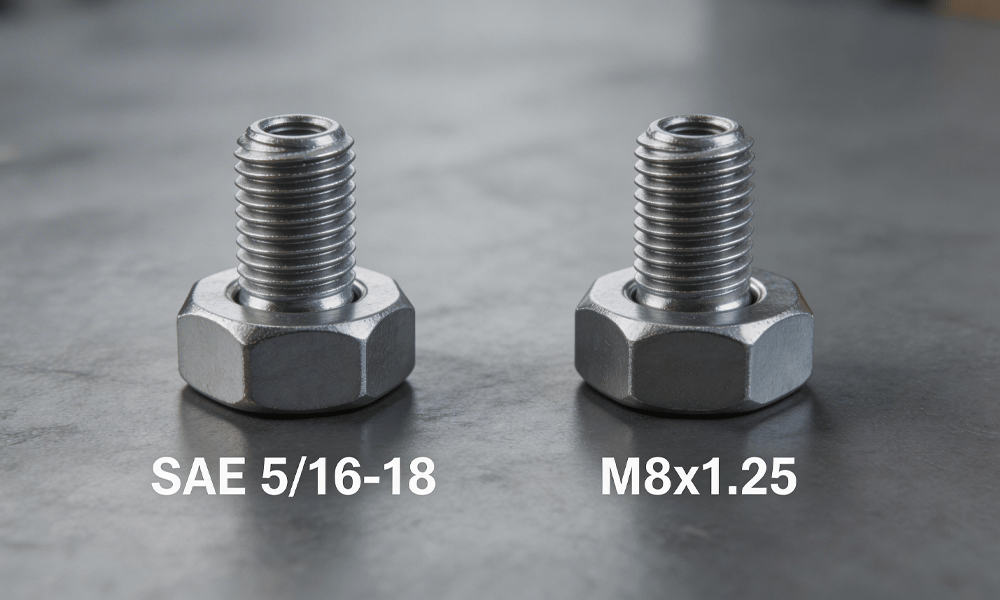
All because I’d forced an SAE 5/16-18 bolt into what turned out to be an M8x1.25 hole.
They looked identical to my eye. My cheap plastic caliper said they were “close enough.”
I was wrong.
Three Trips to Home Depot. Three Wrong Bolts. Zero Answers.
Here’s what they don’t tell you about restoring classic cars (or fixing anything, really):
The bolt bins at hardware stores are designed to confuse you.
I’d already made two round-trips that Saturday—40 minutes each way. Each time, I’d squinted at the worn-out thread-pitch boards mounted to the aisle wall, threaded my mystery bolt onto what looked like a match, bought three “close enough” options, and driven home.
None of them fit.
By the third trip, I was that guy—standing in the fastener aisle with engine grease under my fingernails, holding up the checkout line while a 19-year-old cashier googled “metric vs. SAE thread pitch.”
The whole project—my way of honoring my dad’s memory—was turning into a rage-inducing nightmare.
And then I made the mistake that would haunt me for months.

The Moment I Broke Something Irreplaceable
Back in the garage for the fourth time that day, I was done guessing.
“It’s gotta be this one,” I muttered, gripping what I thought was the right bolt.
I threaded it in. It resisted slightly. I pushed harder.
“Maybe it just needs a little torque,” I told myself.
SNAP.
That sickening sound—metal shearing under force—told me everything.
I’d cross-threaded the bolt. And because I’d forced it, I’d stripped the internal threads of the engine block’s mounting hole.
The same engine block my father had hand-rebuilt in 1985.
I sat on the concrete floor of the garage, head in my hands, surrounded by jars of fasteners I couldn’t identify.
Hundreds of dollars worth of perfectly good bolts—rendered useless because I couldn’t tell them apart.
Then My Neighbor Showed Me Something That Changed Everything
Two weeks later, still nursing the wound to my pride (and my wallet), I mentioned the disaster to my neighbor, Rick—a retired aircraft mechanic.
He disappeared into his garage and returned holding a compact black case.
“Before you touch another bolt,” he said, “let me show you what we used in the Air Force.”
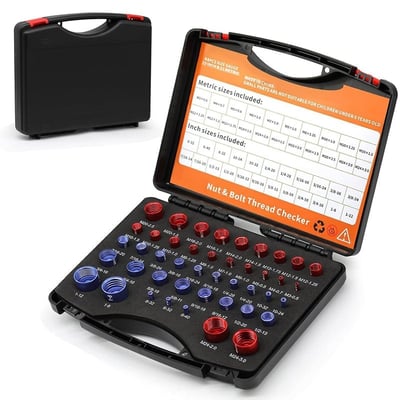
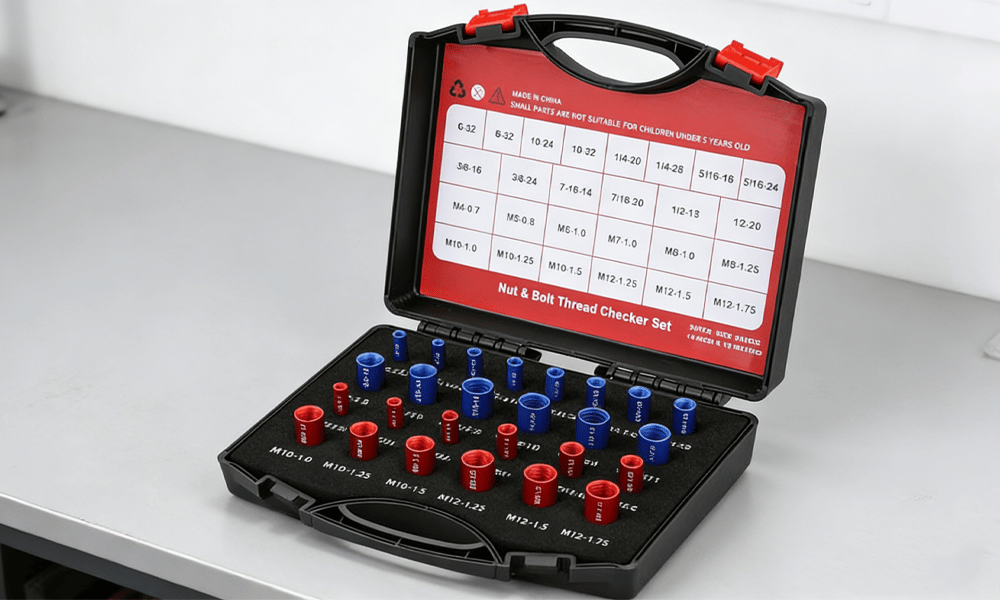
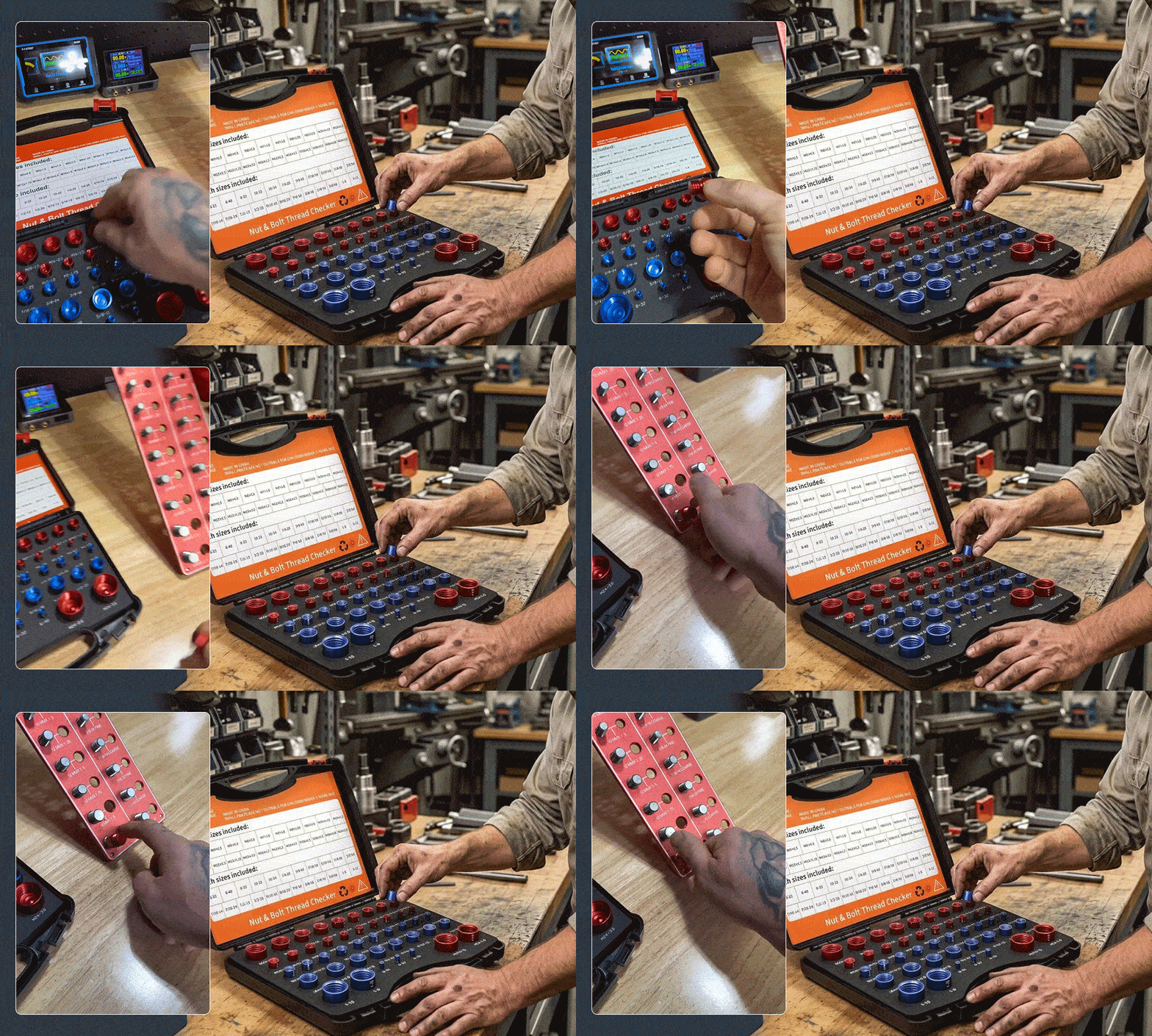
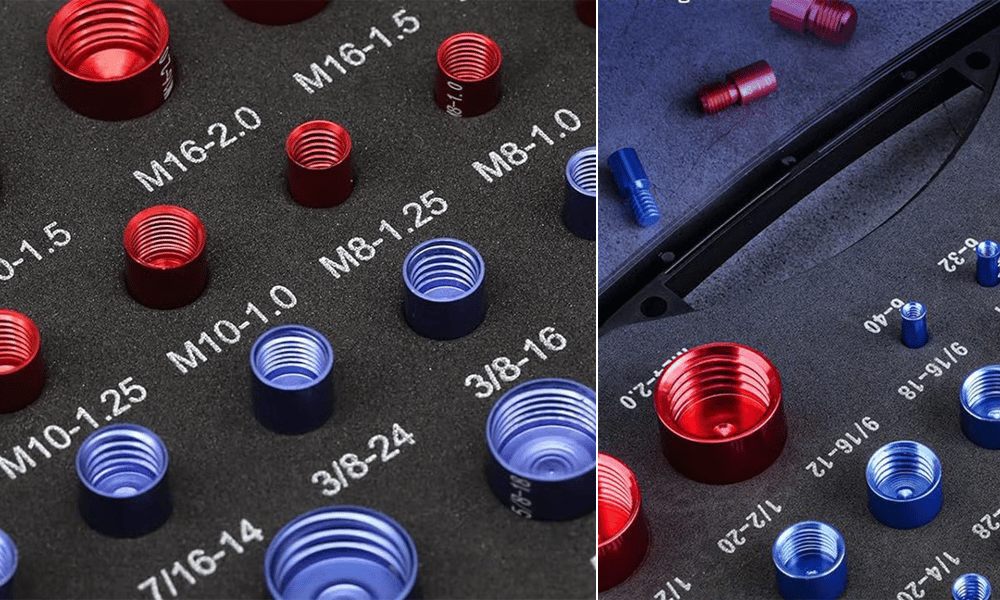
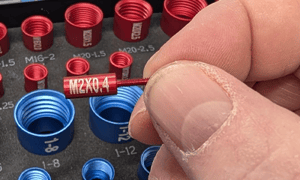
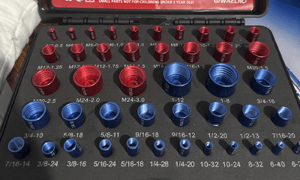
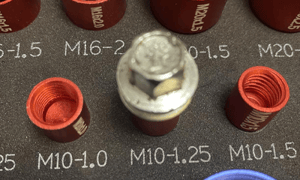
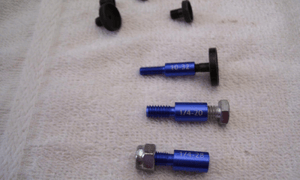
He opened the case to reveal rows of color-coded aluminum gauges—blue and red—each laser-etched with numbers.
“It’s a thread checker,” Rick explained. “But not like those garbage plastic things at the hardware store.”
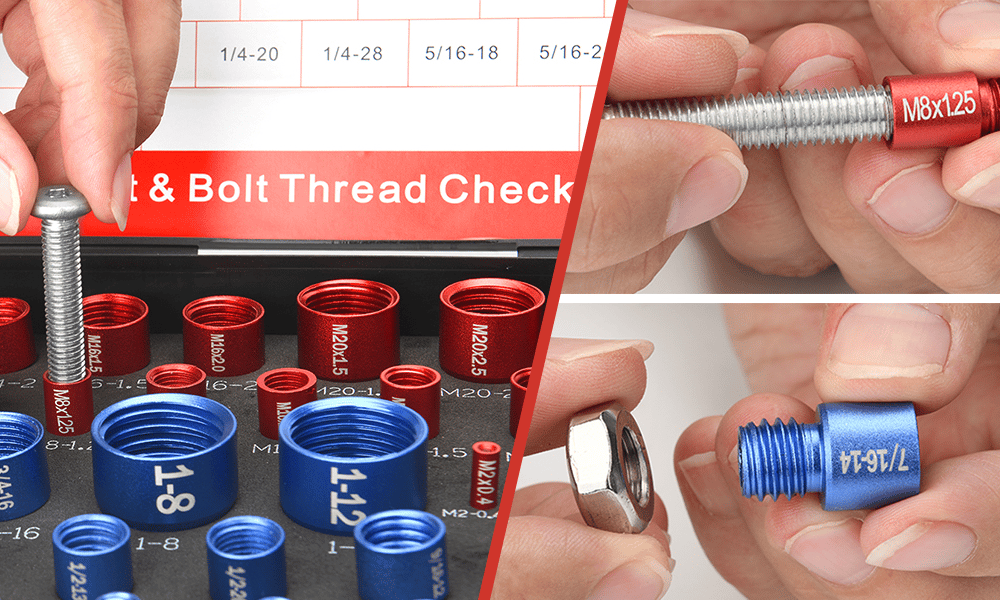
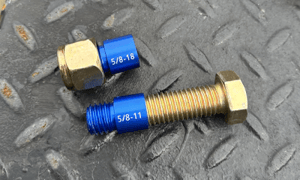
He grabbed a random bolt from my “mystery coffee can” and threaded it onto one of the blue gauges.
Perfect fit. No resistance. No forcing.
He flipped the gauge over.
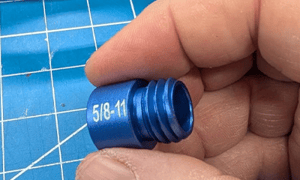
“5/16-18. SAE. Now you know for certain.”
Three seconds. Zero guessing.
Why “Eyeballing It” Will Always Fail (The Micro-Tolerance Deception)
Here’s what Rick taught me that day:
The human eye cannot detect the difference between thread pitches that vary by 0.05 millimeters.
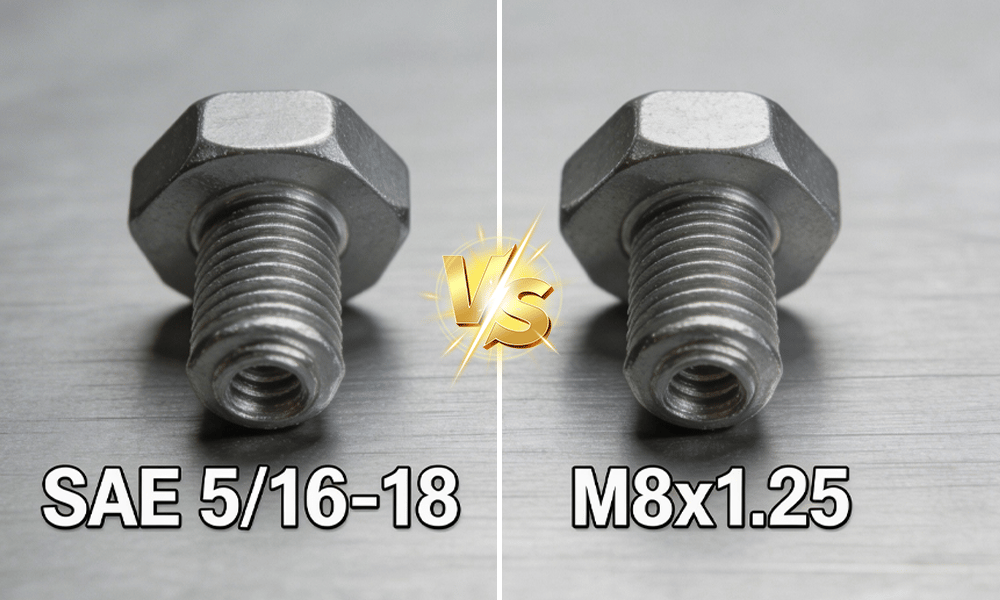
An SAE 5/16-18 bolt and a Metric M8x1.25 bolt are virtually identical to look at. Even measuring the diameter with calipers won’t help—because diameter alone doesn’t tell you thread pitch.
Thread pitch = the distance between threads.
Get it wrong by even a fraction of a millimeter, and you’re cross-threading. Every. Single. Time.
“That’s why plastic thread checkers warp over time,” Rick continued. “And why tape measures are useless. You need precision-machined metal that physically confirms the thread match.”
He called it the “Tactile Thread-Verification System.”
No measuring. No squinting. No guessing.
Just screw the bolt into the gauge. If it threads smoothly with zero resistance, it’s a 100% match.
The Tool That Saved My Mustang (And My Sanity)
Rick handed me the kit.
“I bought this Nut & Bolt Thread Checker fifteen years ago. Aluminum alloy—won’t rust, won’t warp. Laser-etched labels so they’ll never rub off. It’s survived desert deployments, greasy toolboxes, and more cross-threaded disasters than I can count.”
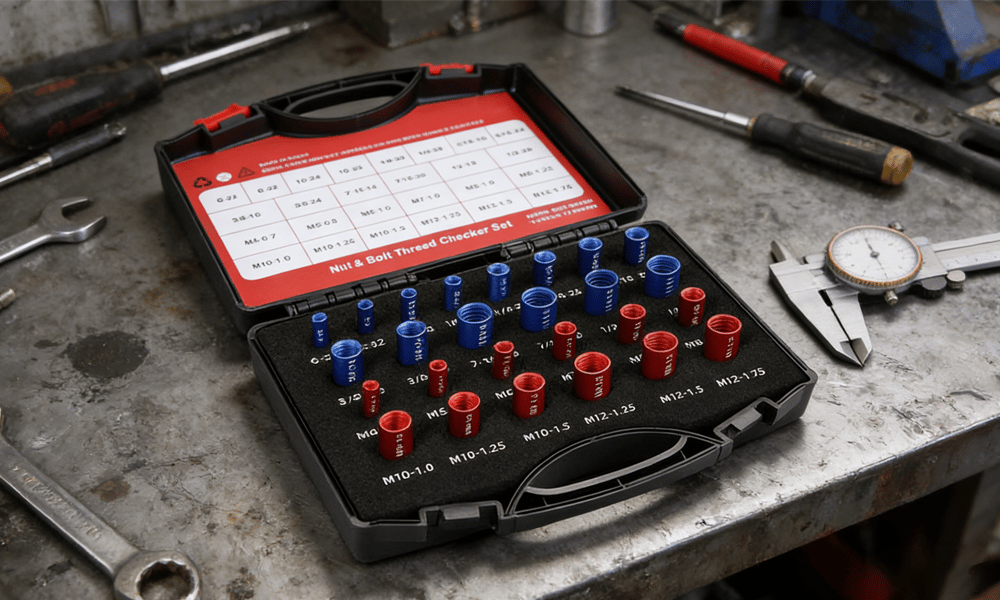
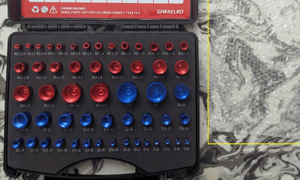
I stared at the organized foam case—44 precision-machined gauges (23 SAE sizes in blue, 21 Metric sizes in red).
For the first time in weeks, I felt hope.
“How much did this cost you?” I asked.
“Doesn’t matter,” Rick said. “What matters is it’s paid for itself a thousand times over. Every bolt you don’t strip, every trip to the hardware store you don’t waste—it adds up fast.”
I Tested It On My “Coffee Can of Chaos”—And Sorted 200 Bolts in 30 Minutes
That Sunday, I dumped my entire collection of mystery fasteners onto the workbench.
Hundreds of bolts. Nuts. Washers. All mixed together.
Before the Thread Checker, this jar was a source of anxiety. Now? It was about to become a perfectly organized inventory.
I grabbed the first bolt. Tried a blue gauge. Too tight.
Next blue gauge. Smooth as butter.
Flipped it over: 1/4-20 SAE.
Tossed it in the blue bin labeled “1/4-20.”
Next bolt. Red gauge. Perfect fit. M10x1.5.
Red bin. Next. Next. Next.
In 30 minutes, I’d sorted over 200 fasteners with absolute certainty.
My garage went from “chaotic mess” to “professional workshop.”
Real Stories From People Who Stopped Guessing
Don’t let the next project turn into a disaster.
Get the tool that stops you from cross-threading, stripping, and wasting another weekend on guesswork.
Jake M., Motorcycle Restorer:
“I was rebuilding a 1972 Honda CB750 and kept buying the wrong bolts for the carburetors. Metric sizes are SO close to each other. This thread checker saved me four trips to the dealer. Worth every penny.”
Linda R., DIY Homeowner:
“My husband left behind a garage full of bolts when he passed. I had no idea what any of them were. This kit helped me organize everything and finish the deck project we’d started together. It felt like he was guiding me.”
Tyrone S., Professional Plumber:
“I use this on job sites to verify pipe fitting threads before I order custom parts. Clients don’t wait, and I don’t have time for guesswork. This is in my van 24/7.”
But Here’s What Really Sold Me: The Aluminum Never Lies
A week later, I was back under the Mustang’s hood—this time replacing a water pump.
I needed an M12x1.75 bolt. In the past, I would’ve spent 20 minutes digging through bins, squinting at thread patterns, maybe driving to the store.
Now?
I threaded the bolt onto the red M12x1.75 gauge. Perfect tactile confirmation in 3 seconds.
No second-guessing. No “close enough.”
Just pure, undeniable physical proof.
Rick was right. The premium aluminum alloy doesn’t warp like plastic. The laser-etched markings don’t fade like ink. The EVA foam case keeps every gauge exactly where it belongs.
What Makes This Different From Every Other “Sizing Tool”
I’ll be honest—I’d seen thread checkers before.
Cheap plastic ones at Harbor Freight. Flimsy wire ones at Lowe’s.
They all sucked.
Here’s why the Nut & Bolt Thread Checker is in a different league:
1. Precision-Machined Aluminum Alloy = Zero Tolerance for Error
Plastic warps. Cheap metal bends. This aerospace-grade aluminum maintains thread accuracy for decades.
If the bolt threads smoothly onto the gauge, it’s a perfect match. Period.
2. Color-Coded = Instant Visual Organization
Blue gauges = SAE (Inch sizes)
Red gauges = Metric sizes
No more squinting at tiny text. Grab the right color family, test the sizes, done.
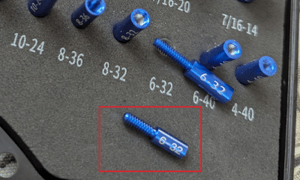
3. Laser-Etched Labels = Lifetime Readability
Unlike painted or stamped markings, these labels are carved into the metal. Grease, oil, years of abuse—they’ll never fade.
4. EVA Foam Storage = The Tool Never Gets Lost
Each gauge has its exact spot in the foam case. If a slot is empty, you know which size you’re missing.
No more digging through toolbox drawers.
Stop Guessing Bolt Sizes!
I Used to Bring Random Bolts to the Hardware Store… Until This Thread Checker Helped Me Identify the Exact Size in Seconds. No Guesswork, No Wasted Time — Just Quick, Accurate Thread Matching!
| Feature | Ours | Others |
|---|---|---|
| Identify Thread Size Instantly |  Identify in seconds Identify in seconds
|
 Trial and error Trial and error
|
| Supports Metric & Standard Threads | Yes
|
No
|
| Works for Nuts & Bolts | Dual-purpose design
|
No
|
| Accuracy | High precision thread matching
|
Very inaccurate
|
| Saves Time on Repairs | Immediate identification
|
Very time-consuming
|
It's Not Just Me...
Thousands of 5-Star Reviews Love It!

This thread checker is incredibly helpful in my garage. I can quickly identify bolt sizes instead of guessing. It saves so much time when working on repairs or DIY projects.


Verified Purchase

Here’s What You Get:
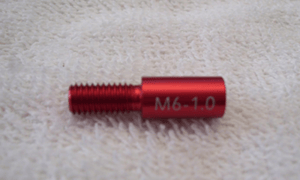
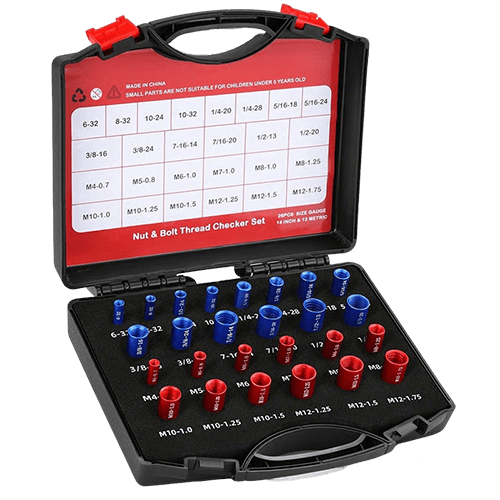
✅ 44 precision-machined aluminum alloy thread gauges (or 26-piece compact set)
✅ Color-coded system (Blue = SAE, Red = Metric)
✅ Laser-etched permanent labels
✅ Custom EVA foam storage case (28 × 22 × 5 cm)
✅ Rust-resistant construction
✅ Lifetime durability (seriously, this thing is built like a tank)

We Offers a 100%
Satisfaction Guarantee...
You can try ourNut & Bolt Thread Checker completely risk-free.
If you're not satisfied with your purchase, we'll refund you — every single penny, no questions asked, no hassle.
We can make this promise because we're confident in what we offer:
·90-day quality warranty
·90-day money-back guarantee

90-Day Money Back Guarantee

Guaranteed Safe and Secure Checkout

Fast Shipping

No-Hassle Returns
Frequently Asked Questions
Q: How do I know if I need SAE or Metric?
A: If you’re working on American-made vehicles (pre-1980s), you’ll mostly use SAE (blue). European/Asian vehicles or newer American cars use Metric (red). When in doubt, test both—it takes 5 seconds.
Q: Will this work on old/rusty bolts?
A: Yes! As long as the threads aren’t completely destroyed, the gauges will identify the size. I’ve used mine on 40-year-old Mustang bolts.
Q: Can this check internal threads (nuts/holes)?
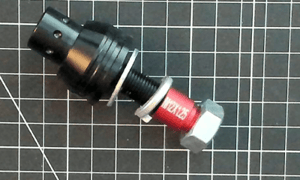
A: Absolutely. The gauges have both male and female threads, so you can verify nuts, bolt holes, and threaded rods.
Q: What if I lose a gauge?
A: Each gauge is a standalone tool. If you lose one, the rest still work perfectly. (But the EVA foam case makes losing them nearly impossible.)